Stop losing customers to a website that doesn't convert.
We're a top-rated web design agency in London specialising in bespoke, conversion-driven websites for businesses of all sizes — from funded startups to global enterprises.
The working Web design
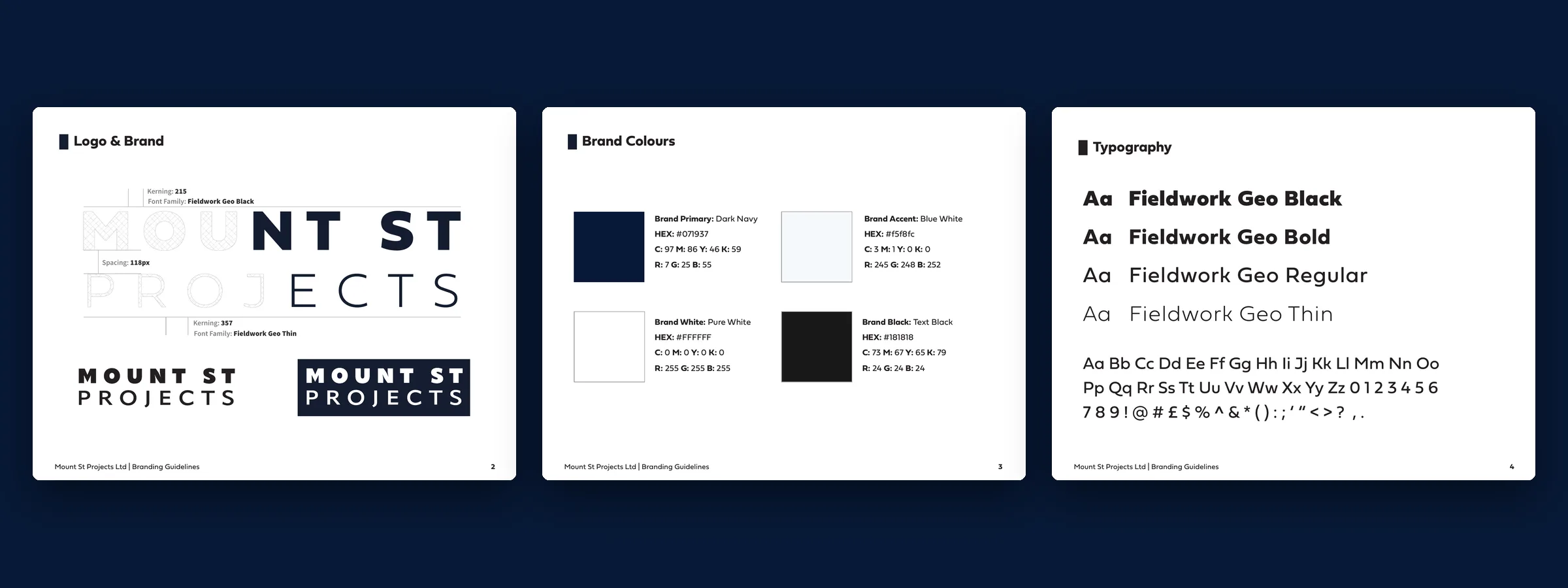
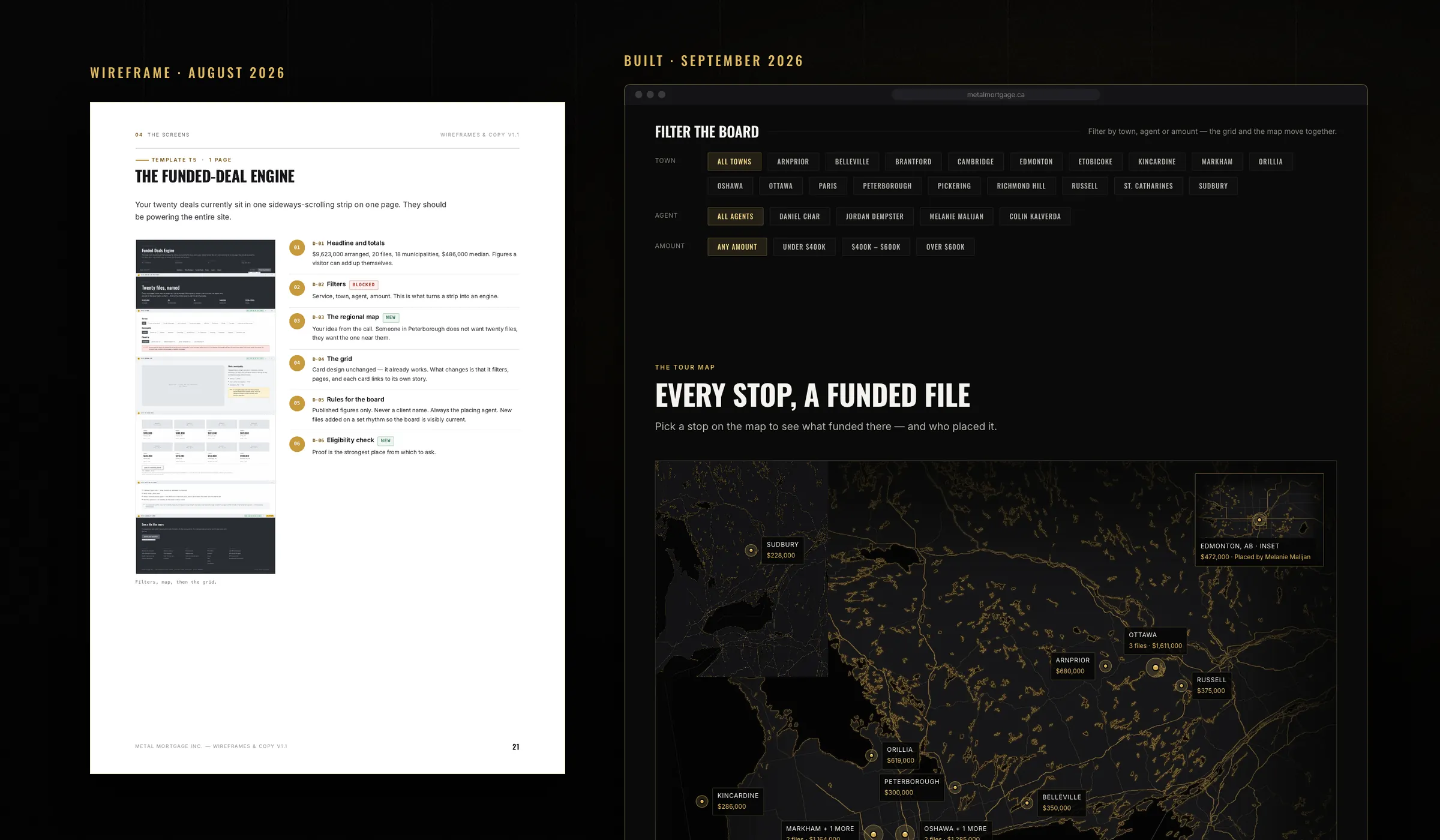
One we built: Mount St Projects.
Each numbered note marks a decision we made on the real site, not a feature list.
- From
- £5,000
- Design and build
- from £8,000
- Typical timeline
- 6–10 weeks for a marketing website
- You receive
- Art direction, the page designs that matter and a documented component system
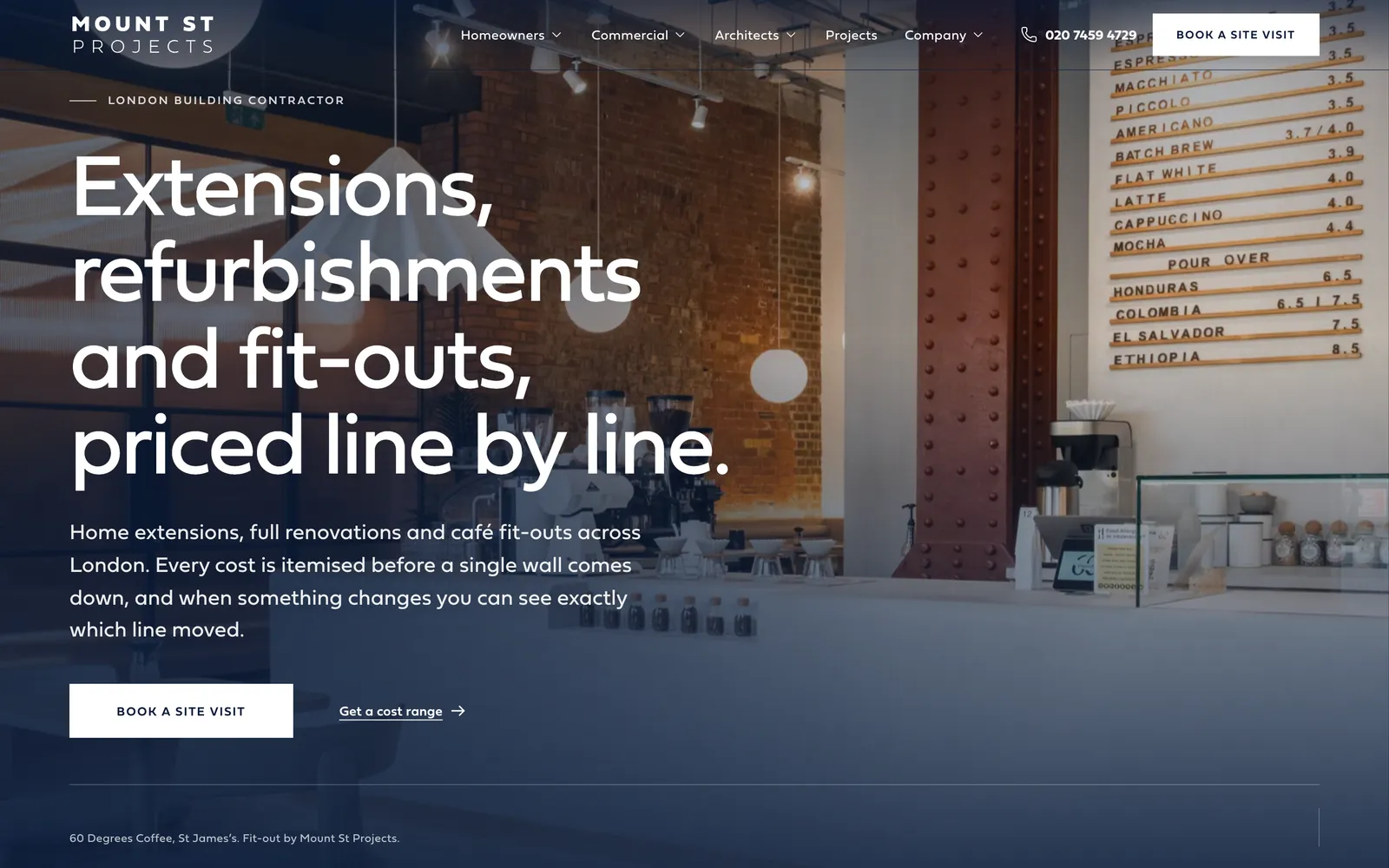
- 01Three menus for three buyers: homeowners, commercial clients and architects.
- 02The headline is a promise the site then proves: every job is priced line by line.
- 03Cost planner. PHP and JS read one ranges file, and a parity test checks they agree.
- 04Real project photography, credited to the job it came from.
Web design built on psychology, not templates.
We don't use off-the-shelf themes or drag-and-drop builders. Every website we design is a bespoke system of visual hierarchy, persuasion patterns, and interaction design — engineered to guide your visitors from first impression to conversion.
Responsive & Mobile-First
Every layout is designed for mobile first, then progressively enhanced for tablet and desktop. Your site looks and performs beautifully on every screen size.
Conversion-Driven
Strategic CTA placement, visual hierarchy that draws attention to key actions, and friction-free user journeys designed to turn browsers into buyers.
Psychology-Backed
We apply principles from behavioural psychology — social proof, anchoring, progressive disclosure — to create designs that resonate on an emotional level.
A digital identity as unique as your business.
Your website is the first impression most customers will have of your brand. A generic template signals a generic business. We design custom websites that capture your brand's personality, communicate your value proposition in seconds, and give visitors the confidence to take the next step.
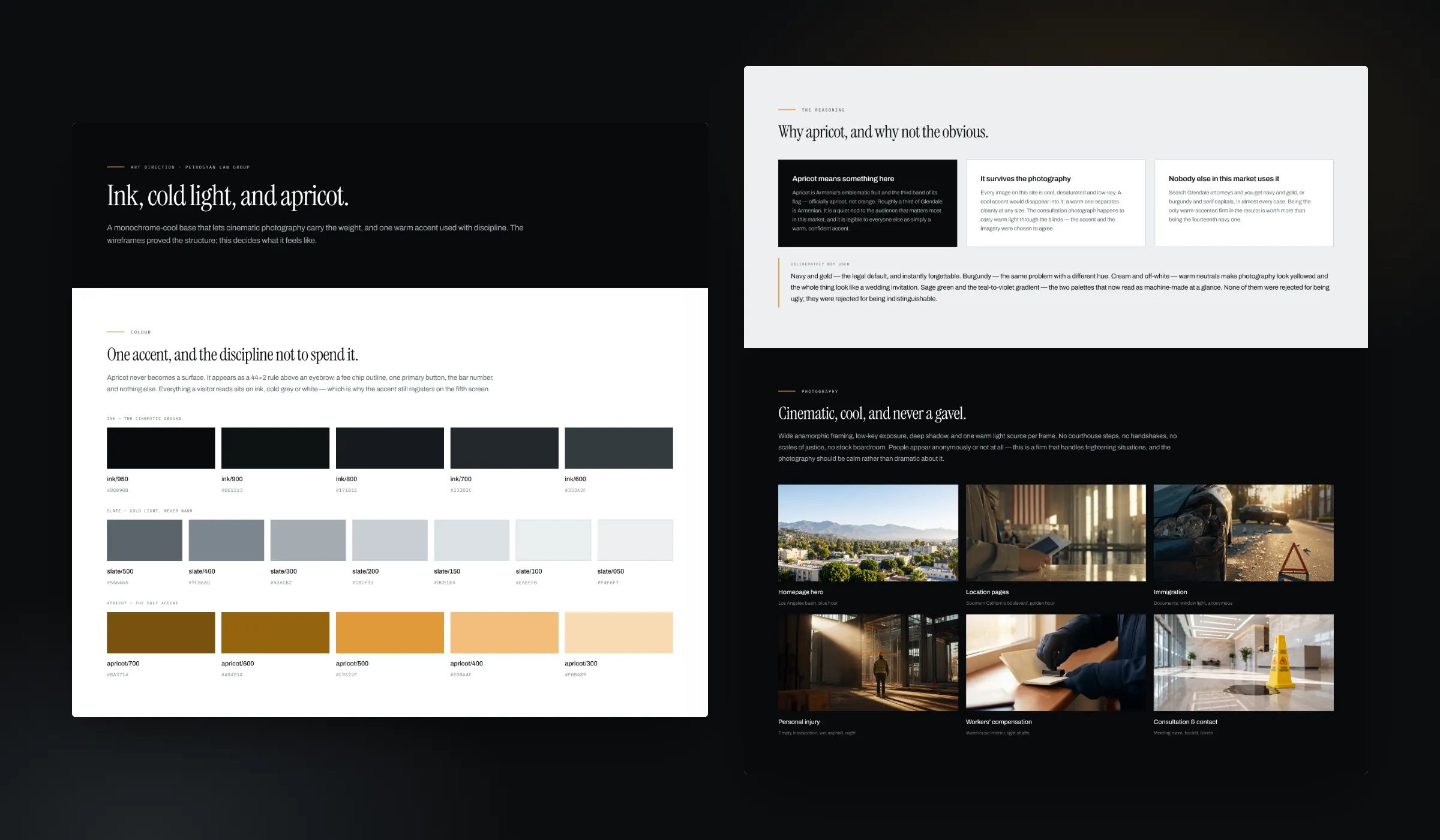
- Custom design concepts — no templates, no page builders
- Brand-aligned typography, colour systems, and visual language
- Strategic content layout based on user behaviour data
- High-fidelity prototypes for stakeholder review before build
- Design system documentation for long-term brand consistency
Designed to sell, not just to look good.
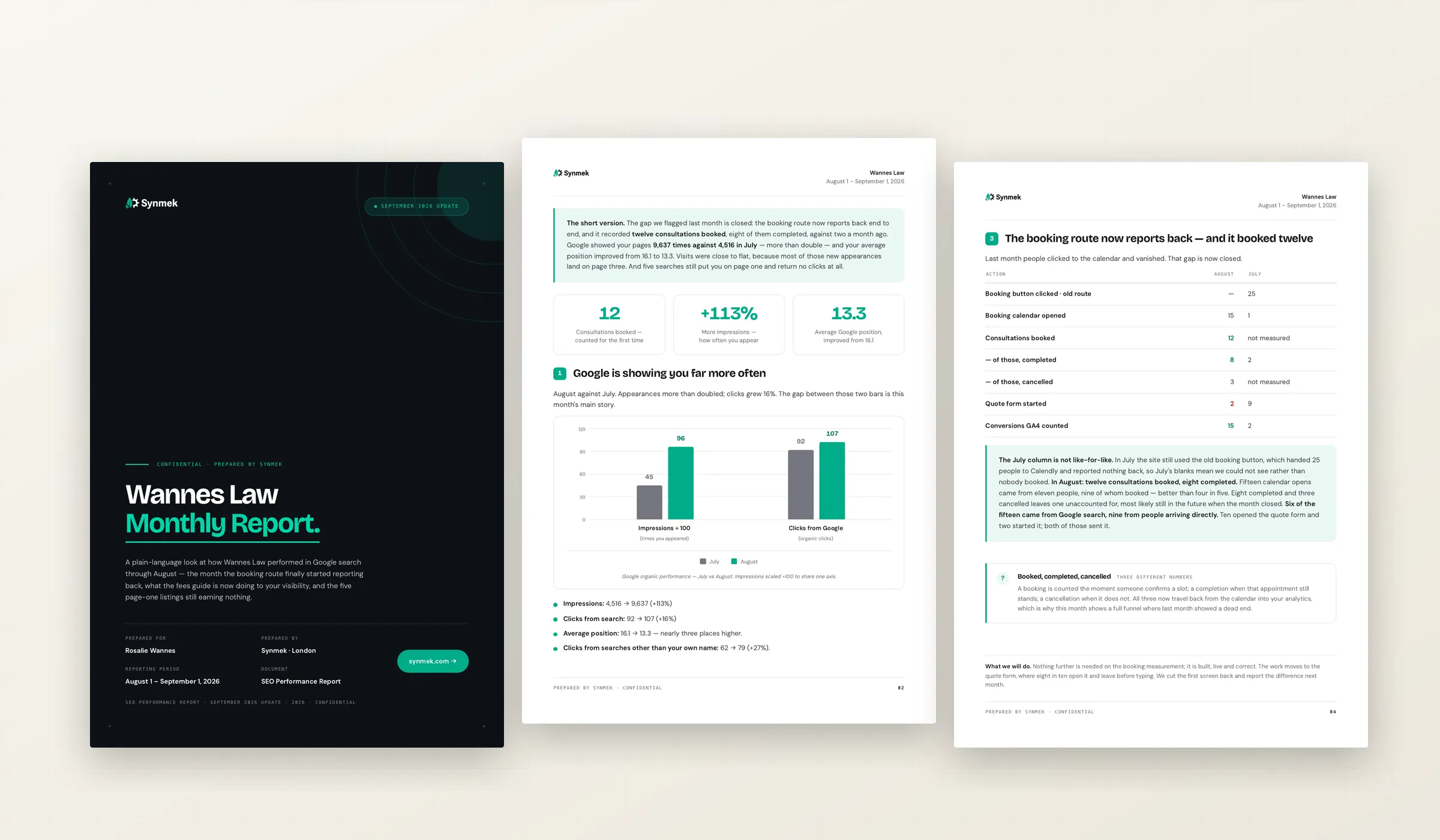
A beautiful website that doesn't convert is an expensive brochure. We design every page with a clear commercial objective — whether that's lead generation, product sales, booking signups, or brand authority. Every element earns its place on the page.
- Heatmap and session recording analysis to inform layout decisions
- A/B tested landing page patterns and CTA strategies
- Lead capture forms optimised for completion rate
- Page speed optimisation for sub-3-second load times
- SEO-ready structure with schema markup and semantic HTML
Your website is your brand's most visible asset.
We don't just design websites — we build cohesive visual identities that carry across every touchpoint. From your homepage hero to your email signatures, the visual language we create ensures your brand is instantly recognisable and consistently professional.
- Brand audit and competitor visual analysis
- Custom colour palettes, typography, and icon systems
- Motion design and micro-interactions that reinforce brand personality
- Print-to-digital brand consistency guidelines
- Social media template kits aligned to your web identity
Six phases from brief to launch.
Discovery
Business goals, audience research, competitive analysis.
Strategy
Sitemap, user flows, content architecture.
Wireframes
Layout structure, content hierarchy, interaction patterns.
Visual Design
Brand application, high-fidelity mockups, responsive layouts.
Build & QA
Development, cross-browser testing, performance audit.
Launch
Go-live, analytics setup, 30-day post-launch review.
Beautiful is not the brief.
Every agency shows work that looks good. Almost none will tell you whether it worked, because looking good is easy to demonstrate and working is not. We would rather be judged on the second.
A site has a specific job: get a particular person to take a particular action. Design serves that or it is decoration. In practice this means we spend the early part of a project on unglamorous questions — who arrives on this page, what they already believe, what they need to establish before they will act, and what is currently stopping them. The visual work follows from those answers rather than preceding them.
It also means we design the parts nobody screenshots. Empty states. Error messages. The form after it fails validation. The page a visitor lands on from a search result rather than the homepage. These are where real users actually are, and they are consistently the least designed parts of most websites.
Our thinking on this is set out at length in our guides on emotion in web design and bento layouts.
Design pricing, stated up front.
The variable is the number of genuinely distinct page designs, not the number of pages.
Marketing site — from £5,000
Art direction, the page designs that matter, and a component system. Most sites need six to ten distinct designs, not forty.
Design & build — from £8,000
Designed and hand-coded by the same team, so nothing is lost in handoff and nothing gets quietly simplified during the build.
Larger programmes — £25,000+
Multi-brand systems, design systems intended for an in-house team to extend, or sites with substantial application surface.
Agreed in pieces, so nothing is a surprise.
Large reveals are how projects go wrong. We agree direction early and in small increments, so by the time you see a full page you have already shaped it.
Discovery
Who arrives on each page, what they need to establish, and where the decision actually gets made.
Structure
Content and hierarchy before visuals. What each page must say, and in what order, agreed on paper.
Art direction
Type, colour, spacing and motion — agreed as a direction before any full layouts exist.
Page design
The templates that matter, designed at desktop and mobile together rather than one adapted to the other.
Design system
Components documented with states and rules, so your team can build new pages without redesigning them.
Handoff or build
Figma files and specs to your developer, or hand-coded by us. Either way the system is yours.
When to hire us, and when not to.
Design engagements go wrong for predictable reasons, and most of them are visible before anyone starts. Here is our honest read.
You are probably a good fit if:
- You can articulate what the site needs to achieve, even roughly. “More leads from search” is enough; “a refresh” is not.
- You accept that we will push back. If we think the brief is wrong we will say so, once, with reasoning — then build what you decide.
- You have or can get real content. Design against placeholder text produces sites that break the moment real copy arrives.
- You want a system rather than a set of pages, so your team can add to it later without it drifting.
We are probably the wrong choice if:
- You want three concepts to choose from. We develop one properly, shaped with you as it goes.
- Design decisions need sign-off from a large committee. Design by consensus reliably produces work nobody objects to and nobody notices.
- You want the visual language of whatever is currently fashionable. Trends date, and rebuilding in two years costs more than the difference.
- The budget is below about £5,000 for design. Below that we cannot do the discovery that makes design work rather than merely look finished.
If several of those apply, say so early. There are studios who work very differently and would serve you better.
Common questions about web design.
Tell us what you're building. We'll tell you what it takes.
A free 30-minute call with the people who'd do the work. You leave with an honest view of scope, timeline and cost, whether or not you hire us.
- 65+ projects delivered
- 14+ years
- 6+ countries